
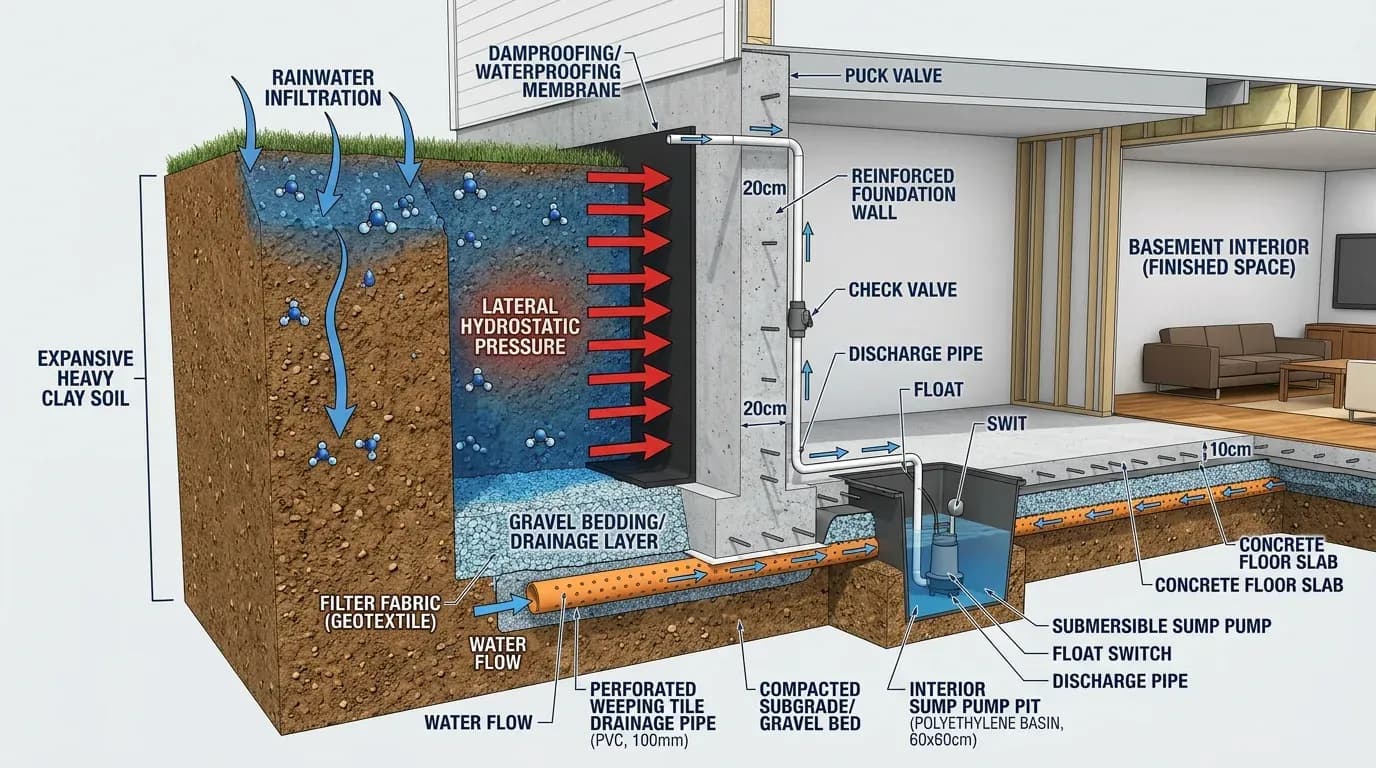
If you've talked to more than a couple of Windsor homeowners about their basements, you've probably noticed a pattern: flooding here isn't rare, and it isn't random. There are two specific, well-understood reasons Windsor basements flood more often than basements in a lot of other Ontario cities — and understanding them is the first step to actually fixing the problem instead of just cleaning up after it every time.
Reason One: The Soil
Windsor sits on heavy clay soil. Clay doesn't absorb and drain water the way sandier or loamier soil does — instead of soaking in and moving away from your foundation, water tends to pool at the surface and against foundation walls, building up hydrostatic pressure (the technical term for the pressure water exerts against a wall it's pushing against). Over time, that pressure finds its way in through the weakest point available: a hairline foundation crack, the floor-wall joint, or a failing seal around a window well.
Reason Two: Aging Infrastructure Meeting More Intense Storms
A lot of Windsor's storm-sewer infrastructure was built decades ago, sized for the storm patterns of that era. Storms have gotten more intense since then — heavier rainfall in shorter windows — and in several documented cases, that combination has overwhelmed the city's drainage capacity enough to cause widespread basement flooding across multiple neighborhoods at once, not just isolated homes with pre-existing problems.
What This Means for Your Home
If your basement has flooded — even once — it's worth understanding that it's very unlikely to have been a fluke. The same soil and the same infrastructure will still be there next time it rains hard. The practical question isn't "will it happen again," it's "what's actually causing water to get in, and what stops it permanently."
That's exactly what a free inspection is for: identifying whether your specific situation calls for interior drainage, exterior waterproofing, crack repair, a sump pump upgrade, or some combination — rather than guessing and hoping.
Need Professional Help with Interior Basement Waterproofing?
Sub-floor perforated drainage channel and vapor barrier system that intercepts hydrostatic water pressure before it reaches your basement floor — with zero exterior excavation.
Rose City Waterproofing Diagnostic Team
VerifiedWritten by licensed, WSIB-insured foundation drainage specialists in Windsor-Essex. All recommendations adhere to the Ontario Building Code (OBC) and municipal flood prevention standards.