
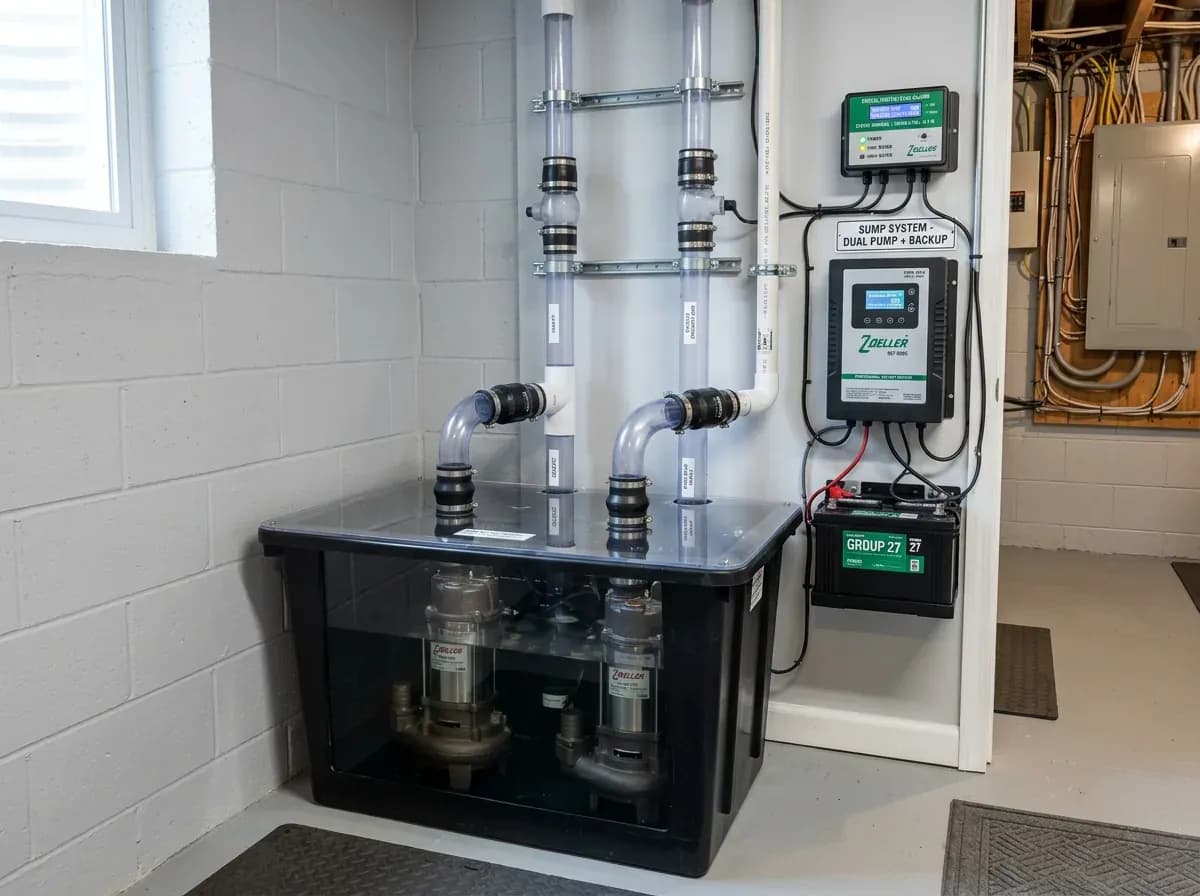
Your sump pump only matters the moment you actually need it — and that's exactly the wrong time to find out it's failed. A few minutes of maintenance a couple of times a year meaningfully reduces that risk.
Every 3–4 Months
- Pour a bucket of water into the pit to confirm the pump activates and drains it properly.
- Listen for unusual noises (grinding, excessive vibration) during operation.
- Check that the discharge line outside is clear and directing water well away from the foundation, not just a few feet from the house.
Twice a Year (Spring and Fall)
- Clean debris out of the sump pit.
- Check the check valve is functioning (prevents water flowing back into the pit, which causes short-cycling).
- Test the battery backup system, if you have one — confirm the battery still holds a charge and the backup pump activates correctly during a simulated power loss.
- Confirm the pit lid is properly sealed.
Know the Age of Your Pump
Most sump pumps have a working life of roughly 7–10 years, even with good maintenance. If you don't know your pump's age or install date, that's worth finding out — a pump nearing or past that range can fail without much warning, maintenance or not.
Do You Have a Battery Backup?
Given how often Windsor storms cause power outages at exactly the moment sump pumps are working hardest, a pump with no battery backup is a real gap — the scenario where you need it most is often the same scenario where grid power goes down.
If You're Not Sure Where to Start
A free inspection includes a full assessment of your current sump pump setup — age, condition, backup status — with a straight answer on whether it needs attention now or can be monitored.
Need Professional Help with Sump Pump Installation & Backup?
Commercial-grade cast iron submersible sump pumps paired with high-capacity battery backup inverters, smart high-water alarms, and quiet dual check valves.
Rose City Waterproofing Diagnostic Team
VerifiedWritten by licensed, WSIB-insured foundation drainage specialists in Windsor-Essex. All recommendations adhere to the Ontario Building Code (OBC) and municipal flood prevention standards.