
Most foundation problems don't appear overnight — they show early signs that are easy to dismiss as normal wear. Here's what to actually watch for.
1. A Crack That's Widening or Leaking
A hairline vertical crack that's stayed the same for years is usually just a shrinkage crack. One that's visibly widening, or one that leaks water — especially after heavy rain — needs a proper look, even if it seems minor.
2. Horizontal or Stair-Step Cracking
Unlike vertical shrinkage cracks, horizontal cracks or a stair-step pattern (following the mortar joints in a block foundation) can indicate the wall is under lateral pressure and starting to move — a structural concern worth having assessed promptly.
3. A Visible Bow or Bulge in a Wall
If a foundation wall looks like it's curving inward, that's a clear sign of ongoing pressure from outside — usually from soil (especially clay, which expands significantly with moisture) pushing against it. This tends to get worse over time, not better.
4. Doors or Windows That Suddenly Stick
When upper-floor doors or windows that used to close fine start sticking or misaligning, and there's no other obvious explanation (like humidity-related wood swelling), it can be a sign the foundation has shifted slightly, changing the shape of the structure above it.
5. A Gap Forming Between the Foundation and the Floor or Walls
A new gap where the foundation wall meets the basement floor, or between the foundation and an adjoining wall, suggests some degree of settling or movement is underway.
What To Do If You Notice Any of These
None of these signs mean panic is warranted — but all of them are worth a real inspection rather than a guess. Catching structural movement early is meaningfully less invasive (and less expensive) to correct than waiting until it's progressed further.
Need Professional Help with Foundation Crack Repair?
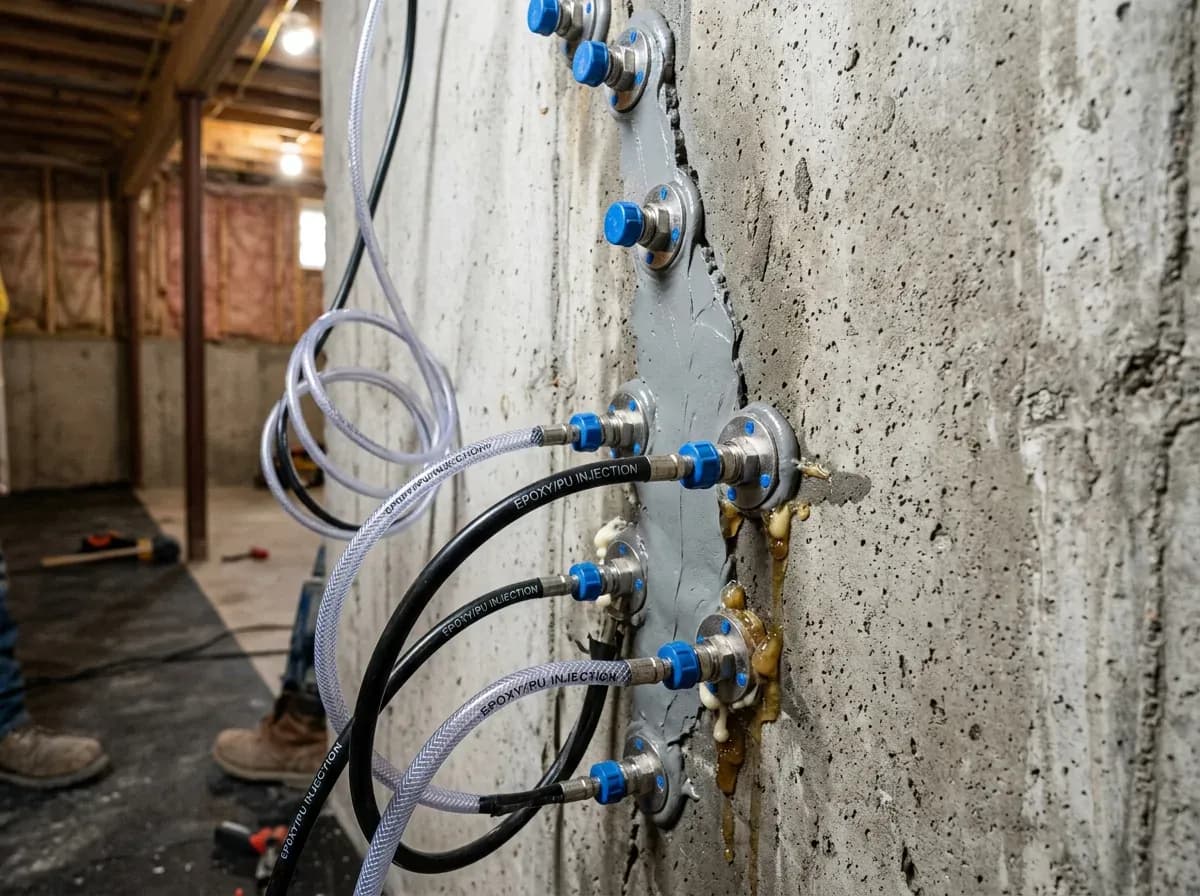
High-pressure dual epoxy and expanding hydrophobic polyurethane injection that penetrates all the way through 8-10" concrete walls, bonding structurally and sealing water out permanently.
Rose City Waterproofing Diagnostic Team
VerifiedWritten by licensed, WSIB-insured foundation drainage specialists in Windsor-Essex. All recommendations adhere to the Ontario Building Code (OBC) and municipal flood prevention standards.